Reset your pace: adjust goals do not quit



By selfjourneyquest on Feb 20.2026 in Reflection
We have all been there! You start the year with a meticulously crafted plan, a fresh planner, and a surge of ambition. But then, life happens. An unexpected project at work, a change in family dynamics, or simply the realization that the pace you set in January is physically and mentally impossible to maintain in the long run.
When the gap between where you are and where you thought you’d be starts to widen, a dangerous thought often creeps in: “If I can’t do it perfectly, why do it at all?”
This is the “all-or-nothing” trap. But the truth is change is okay, and a goal reset isn’t a sign of failure, it’s a sign of maturity. True success isn’t about rigid adherence to a plan; it’s about the art of the pivot. We tend to view progress as a linear climb to the right. In reality, progress looks more like a staircase, or sometimes a winding mountain path. There are plateaus, there are detours, and sometimes, there are rocks in the way that require you to find a different route. We are talking about building a plan that survives your worst days, not just your best ones. If your goals only work when everything is perfect, your goals are fragile. Learning to recalibrate is how you make them resilient.

Many people view adjusting a goal as “giving up.” In reality, refusing to adjust a goal that is no longer serving you is a form of self-sabotage. Goal reset is actually a strategic advantage because it prevents burnout, it increases self-efficacy, it honors your current reality.
So, how do you adjust your pace without losing your momentum? It requires a blend of self-discipline and radical grace: One of the best ways to practice self-discipline during a reset is to reduce the volume but maintain the habit. Instead of quitting your daily writing habit because you can’t find an hour, commit to ten minutes. You are keeping the neural pathway alive without the overwhelm.
There is a specific kind of guilt that comes with change is okay. We worry about what others will think, or we feel like we’ve let our “past self” down. Grace is the ingredient that makes discipline sustainable. Without grace, discipline becomes a whip we use to punish ourselves. With grace, discipline becomes a supportive structure that helps us grow. If you find yourself needing to reset, speak to yourself as you would a friend. You wouldn’t tell a friend to keep running on a sprained ankle; you would tell them to rest, wrap it up, and walk for a while. Your goals are meant to serve your life, your life is not meant to be a slave to your goals.
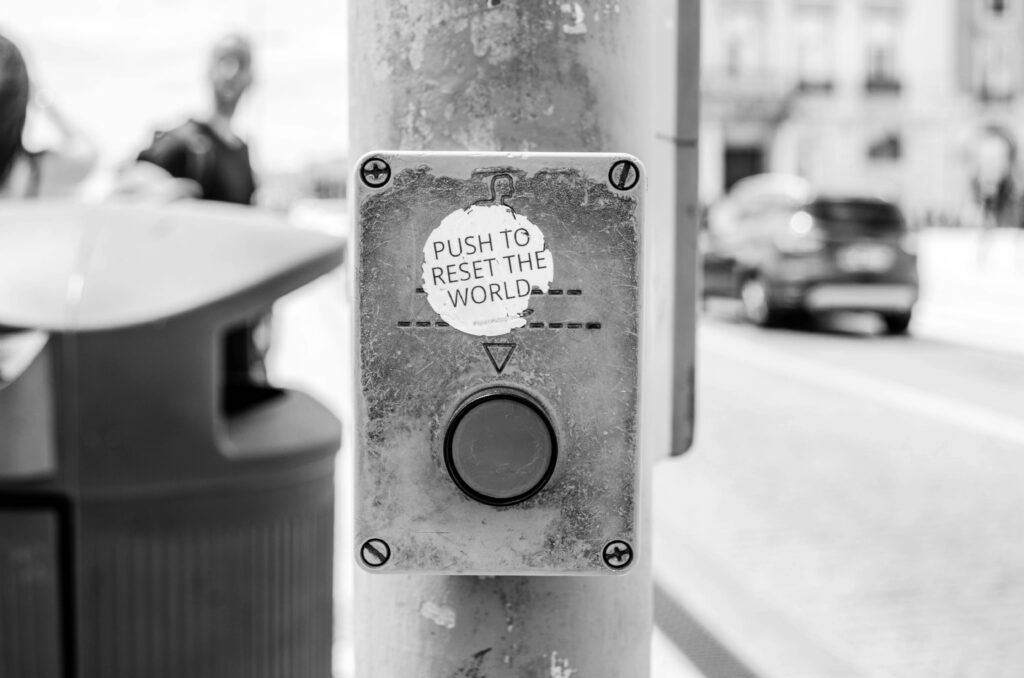
Remember, the goal isn’t to finish by a certain date; the goal is to become the person who can sustain the results. A slow pace still covers distance. A redirected path still leads to a summit. If you feel like you are falling behind, stop looking at the clock and start looking at your feet. Just take the next smallest step. Whether you are running, walking, or crawling, as long as you are moving, you are winning.
Navigating the shifts of a new year requires more than just a plan; it requires a mindset shift. If you’re still feeling the weight of January’s expectations, it might be time to look at how you’re transitioning into the “real life” phase of your journey.
Read our previous blog post on Transitions: new year to real life goals intentionally to learn how to move from the hype of January into a grounded, daily practice that lasts.